
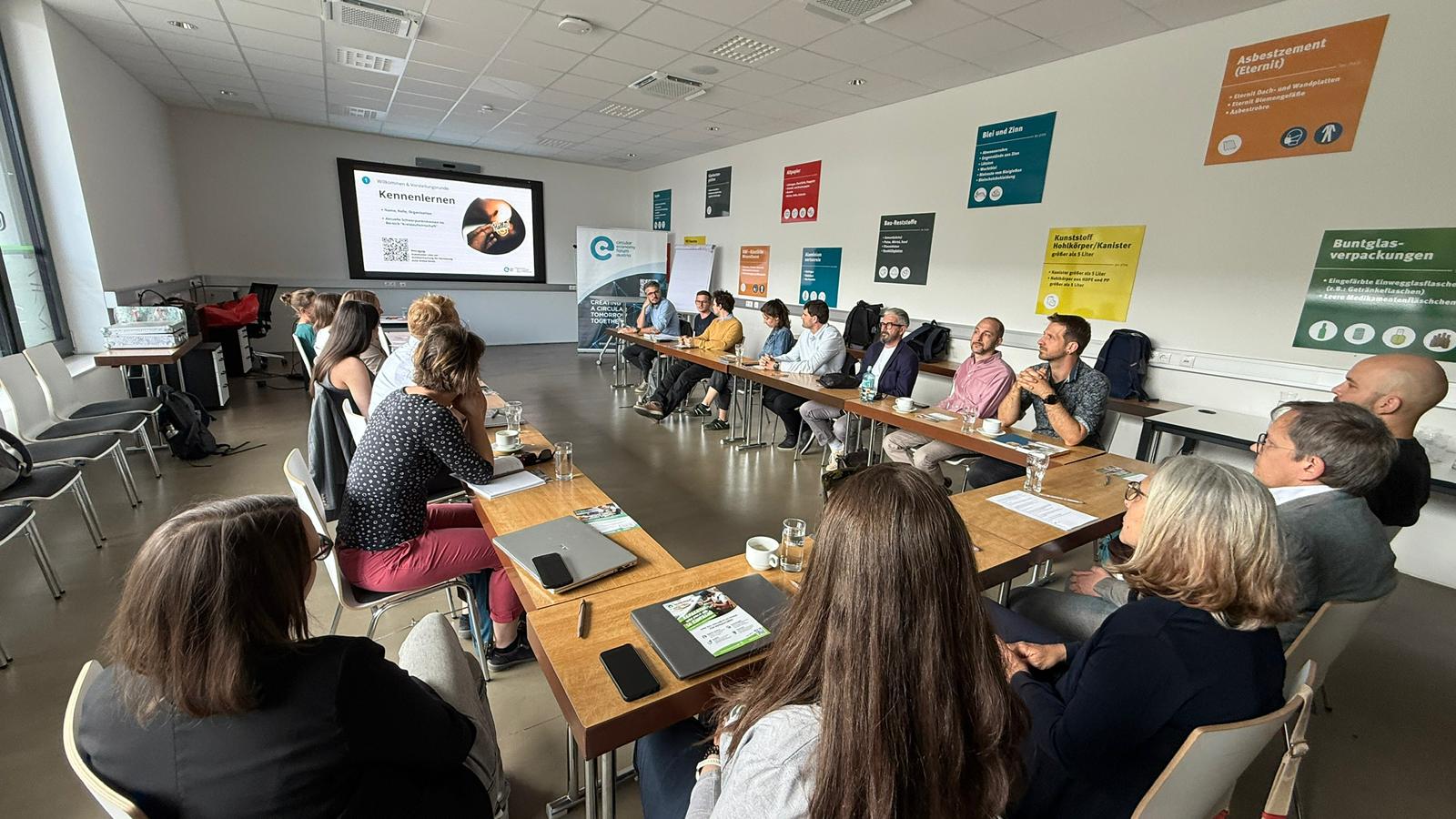
On 6 May 2026 the 9th Circular Cities & Regions Roundtable of the Circular Economy Forum Austria in the Resource Park Graz took place. The focus was on the topic Repair and re-use as key levers of a functioning circular economy.
More than 20 participants from all over Austria - from municipalities, companies, initiatives and organisations - came together to discuss current developments, practical examples and specific challenges.
Elena Stelzig from the Circular Economy Forum Austria kicked off the event with a thematic classification and emphasised the important role of repair for resource conservation, regional value creation and employment.
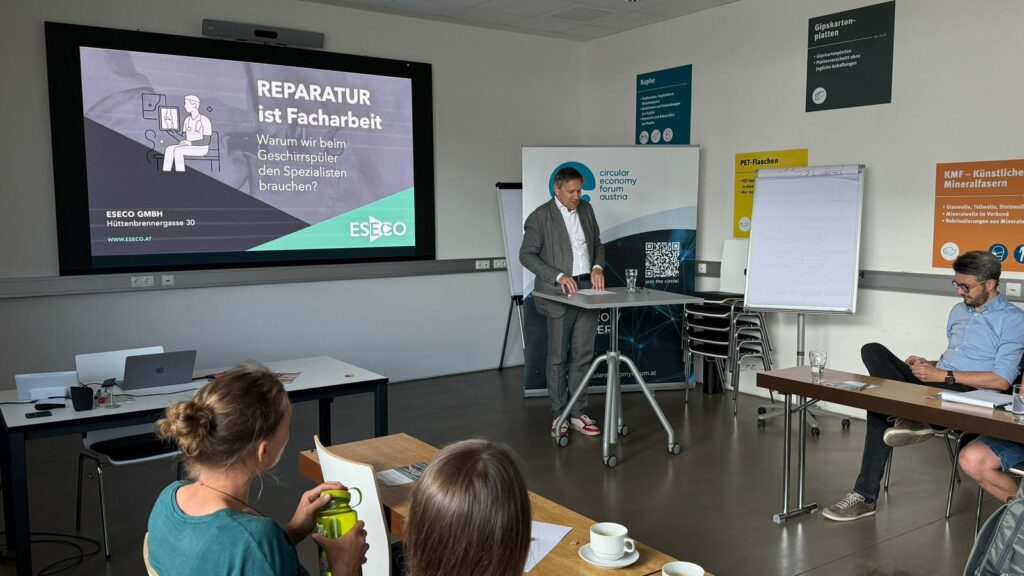
Mario Fasching from Eseco then gave an overview of current legal developments and company repair programmes in Austria. He showed how the regulatory framework is increasingly strengthening repair and reuse and what opportunities this presents for companies.
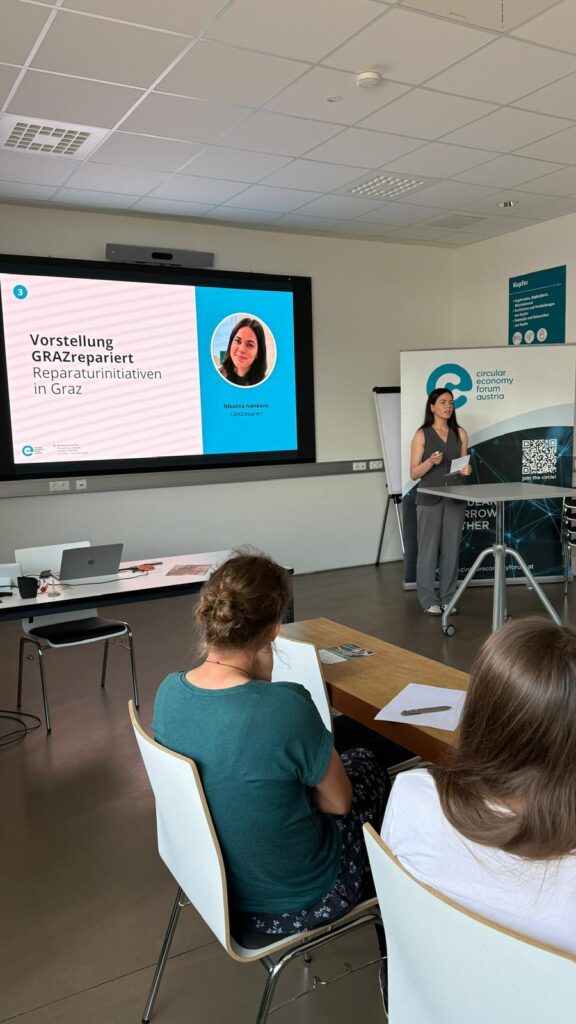
Nikolina Ivankovic presented the GRAZrepariert initiative. The platform networks repair businesses in Graz and makes their services visible. The example impressively showed how regional cooperation can help to make repairs more accessible for citizens and strengthen local businesses at the same time.
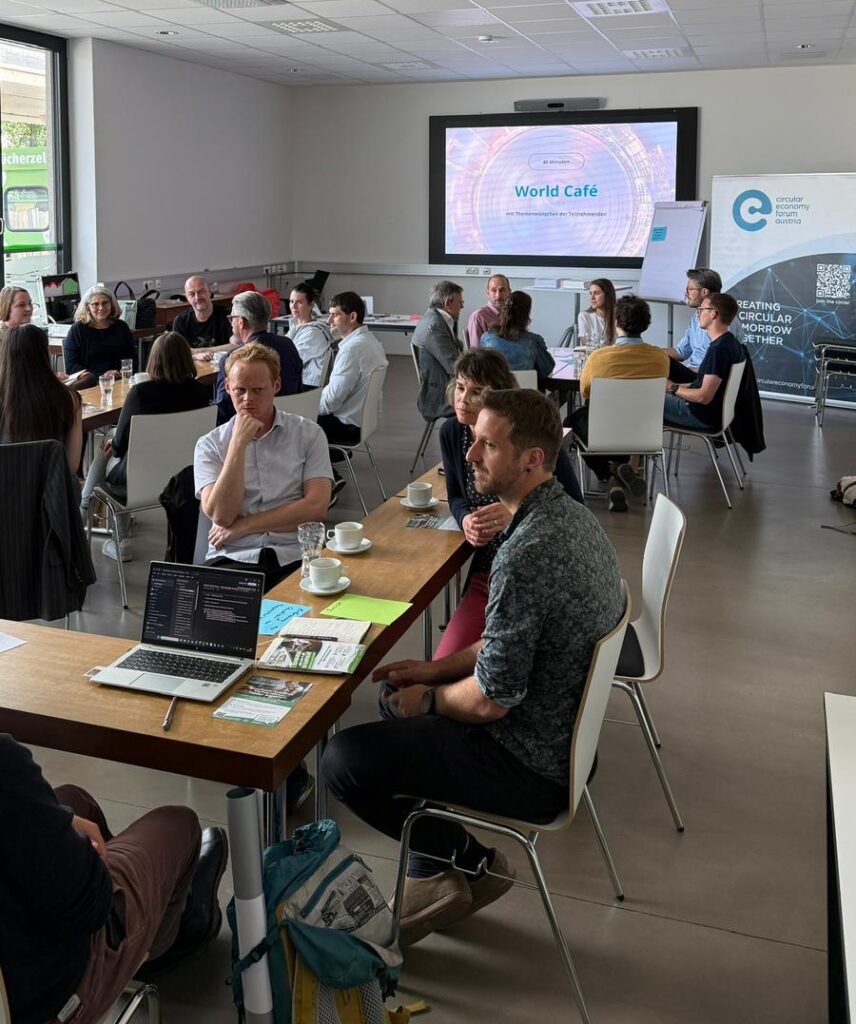
In the interactive World Café, the participants discussed three key topics.
A central topic of discussion was the question of how quality can be made visible. The online sector is often dominated by platforms with many entries, regardless of their actual quality. Austrian platforms already rely on comprehensive quality controls, albeit with very different standards.
In particular, the question of how to achieve a sensible balance between high quality and low-threshold participation was discussed.
Another focus was on the visibility of repair services. The participants agreed that communication and awareness-raising are crucial in order to anchor repair more firmly in society.
The measures mentioned included
The third panel discussed the fact that repair and reuse still need much more attention overall. Despite their great potential, there are still structural and communication hurdles that hinder their wider use.
The roundtable showed that repair is far more than just a technical service. It strengthens regional businesses, saves valuable resources and creates concrete solutions for a circular economy.
At the same time, it became clear that even more joint efforts are needed - particularly in terms of quality assurance, visibility and social awareness-raising.
We would like to thank all speakers and participants for the exciting impulses and the open dialogue at the Resource Park Graz.

Site by Mad Nice Group GmbH
 German German
  English